
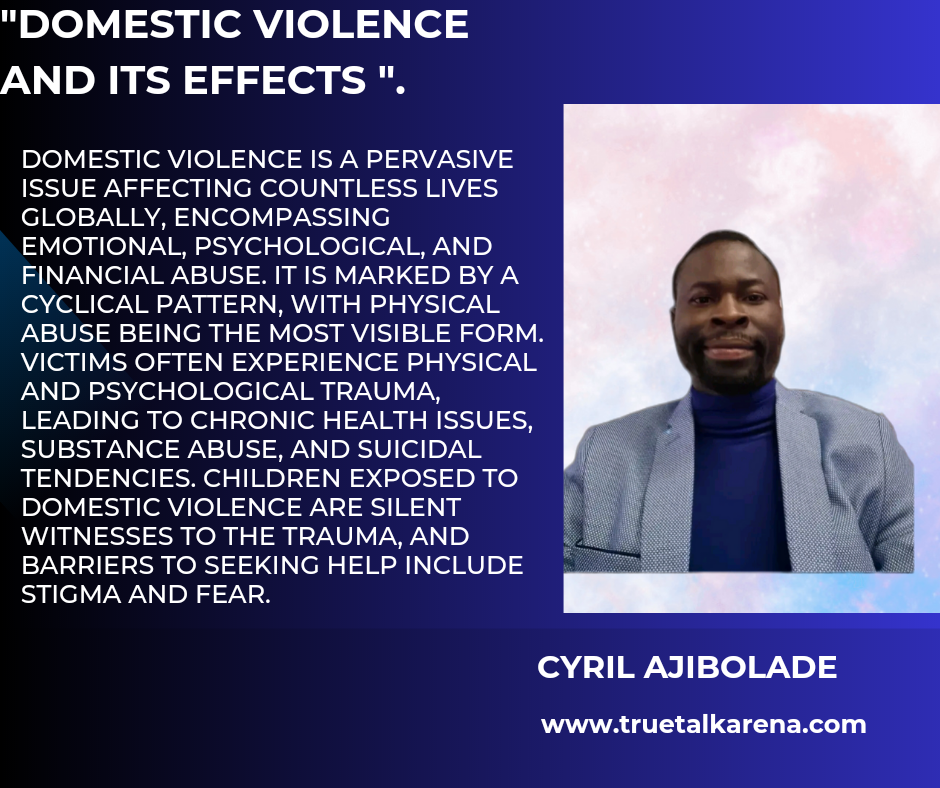
"DOMESTIC VIOLENCE AND ITS EFFECTS".
Unveiling the Silent Epidemic - Domestic Violence and Its Devastating Effects.
Domestic violence, a dark and pervasive issue, remains a silent epidemic affecting countless lives globally. Defined as a pattern of abusive behavior in any relationship used to gain or maintain power and control over an intimate partner, it extends beyond physical violence to encompass emotional, psychological, and financial abuse.
This article delves into the multifaceted aspects of domestic violence and its profound impact on individuals, families, and society.
1. FORMS OF DOMESTIC VIOLENCE: Beyond the Visible BruisesWhile physical abuse is the most recognizable form, domestic violence encompasses various insidious tactics. Emotional abuse involves manipulation, degradation, and isolation, eroding the victim's self-worth. Psychological abuse employs tactics to instill fear and control, often through threats and intimidation. Financial abuse restricts access to financial resources, leaving victims financially dependent and vulnerable.
2. THE CYCLE OF ABUSE: Repetitive PatternsDomestic violence is often marked by a cyclical pattern. The tension-building phase, characterized by escalating tension and verbal abuse, precedes the explosive phase where physical violence occurs. The reconciliation or honeymoon phase follows, where the abuser may apologize, express remorse, and promise change. This cycle can perpetuate the victim's hope for improvement, fostering a complex psychological dynamic that makes leaving difficult.
3. IMPACT ON VICTIMS: Physical and Psychological TraumaThe repercussions of domestic violence are far-reaching. Physical injuries are immediate and visible, but the emotional scars run deep. Victims may experience anxiety, depression, post-traumatic stress disorder (PTSD), and a diminished sense of self. Long-term exposure can lead to chronic health issues, substance abuse, and even suicidal tendencies.
4. CHILDREN AS SILENT WITNESSES: Breaking the Generational ChainChildren exposed to domestic violence are silent witnesses to the trauma, facing an increased risk of behavioral, emotional, and cognitive problems. Growing up in an environment fraught with violence normalizes such behavior, perpetuating a cycle that can extend through generations. Addressing the impact on children is crucial in breaking this intergenerational chain.
5. BARRIERS TO SEEKING HELP: Stigma and FearNumerous barriers prevent victims from seeking help. Stigma and shame often silence survivors, creating a culture of secrecy. Fear of retaliation or further harm, financial dependence, and concerns about the welfare of children can trap victims in abusive relationships. Increased awareness, destigmatization, and accessible support services are essential to empower survivors to seek help.
6. LEGAL PROTECTIONS AND SUPPORT SERVICES: Building a Safety NetLegal mechanisms, such as restraining orders and emergency shelters, provide a safety net for survivors. Advocacy groups, counseling services, and hotlines offer crucial support. Strengthening these resources, along with community education initiatives, is essential to creating an environment where victims can escape the cycle of abuse.
7. THE ROLE OF EDUCATION AND PREVENTION: Breaking the SilenceEducational programs that promote healthy relationships, consent, and conflict resolution skills can play a pivotal role in preventing domestic violence. Early intervention and community awareness campaigns contribute to dismantling the societal norms that perpetuate abusive behaviors.
8. SOCIETY'S ROLE: Shifting ParadigmsDomestic violence is not a private matter; it is a societal issue that demands collective action. Challenging ingrained beliefs, fostering empathy, and holding perpetrators accountable are integral components of creating a culture where domestic violence is not tolerated.
In conclusion, domestic violence is a pervasive issue that demands urgent attention. By understanding its various forms, supporting survivors, and challenging societal norms, we can work towards creating a world where homes are havens of safety and love, free from the shadows of abuse.


0 COMMENTS