
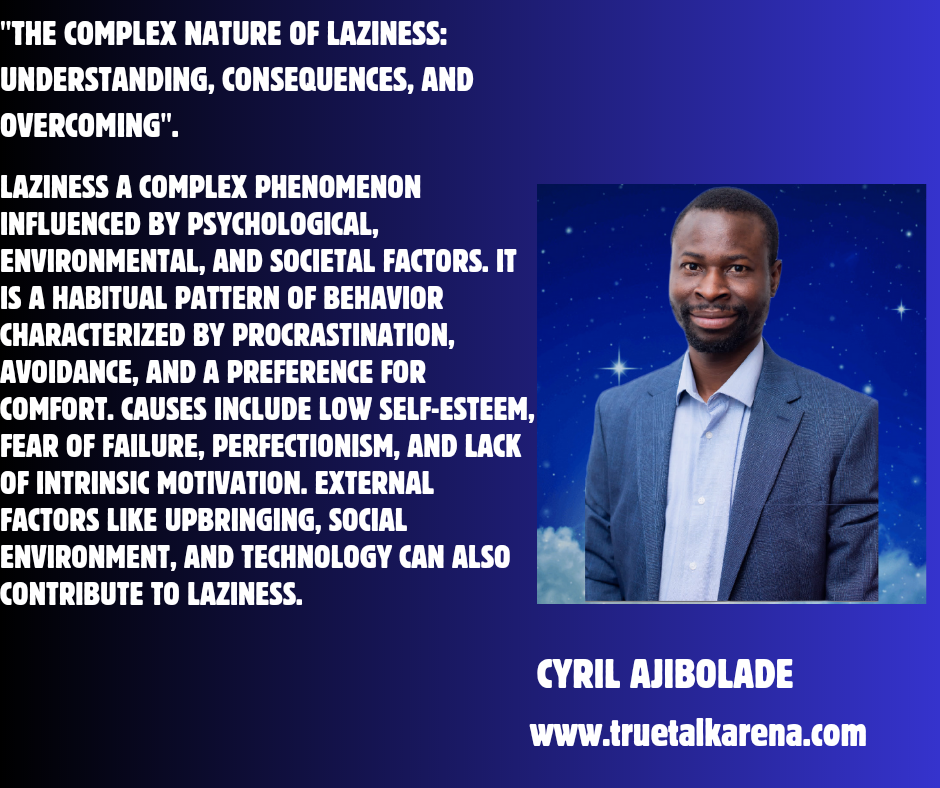
"THE COMPLEX NATURE OF LAZINESS: UNDERSTANDING, CONSEQUENCES, AND OVERCOMING
Laziness, often viewed through a negative lens, is a multifaceted concept deeply ingrained in human behavior. It manifests in various forms and can affect individuals, communities, and societies at large.
While commonly associated with idleness and lack of motivation, laziness is a complex phenomenon that stems from a combination of psychological, environmental, and societal factors.Understanding Laziness:Laziness, also known as sloth or indolence, refers to the reluctance or unwillingness to exert effort or engage in activities that require mental or physical energy. It is not merely a matter of being tired or unmotivated but rather a habitual pattern of behavior characterized by procrastination, avoidance, and a preference for comfort and ease.
CAUSES OF LAZINESS:
Psychological Factors: Laziness can be linked to various psychological factors such as low self-esteem, fear of failure, perfectionism, and a lack of intrinsic motivation. Individuals may avoid tasks due to anxiety or a sense of inadequacy, seeking refuge in activities that provide immediate gratification.
ENVIRONMENTAL INFLUENCES: External factors such as upbringing, social environment, and cultural norms can contribute to the development of lazy tendencies. A lack of role models or exposure to a culture that values hard work and perseverance may foster a mindset of lethargy and apathy.
TECHNOLOGY AND CONVENIENCE: The advent of technology and modern conveniences has made it easier than ever to indulge in laziness. With smartphones, streaming services, and delivery apps providing instant access to entertainment and services, the temptation to procrastinate and avoid responsibilities is heightened.
CONSEQUENCES OF LAZINESS:
While laziness may offer temporary relief from stress or discomfort, its long-term consequences can be detrimental to personal growth, relationships, and overall well-being.
STAGNATION: Laziness inhibits personal and professional development by hindering progress and preventing individuals from reaching their full potential. Procrastination and avoidance can lead to missed opportunities and a sense of dissatisfaction with one's accomplishments.
STRAINED RELATIONSHIPS: Laziness can strain relationships with friends, family, and colleagues, as unreliable behavior and a lack of initiative may cause frustration and resentment. Dependence on others to pick up the slack can create tension and undermine trust.
HEALTH IMPLICATIONS: Sedentary behavior associated with laziness can have adverse effects on physical health, leading to weight gain, muscle atrophy, and increased risk of chronic diseases such as obesity, diabetes, and cardiovascular disorders.
Moreover, neglecting mental stimulation and engagement can contribute to feelings of boredom, depression, and anxiety.
HOW TO OVERCOME LAZINESS:
Overcoming laziness requires a combination of self-awareness, discipline, and strategic planning. While it may not be easy, the following strategies can help individuals break free from the cycle of procrastination and lethargy:
SETTING CLEAR GOALS: Establishing specific, achievable goals provides a sense of direction and motivation to take action. Break down larger tasks into smaller, manageable steps to avoid feeling overwhelmed.
CREATING ACCOUNTABILITY: Share your goals with friends, family, or mentors who can provide support and accountability. Setting deadlines and regularly checking in on progress can help maintain momentum and prevent backsliding into laziness.
PRACTICING SELF-COMPASSION: Recognize that occasional laziness is a normal part of the human experience and avoid self-criticism. Instead of dwelling on past failures, focus on learning from mistakes and cultivating a growth mindset.
LIMITING DISTRACTIONS: Identify and minimize distractions that contribute to procrastination, whether it's excessive screen time, social media, or clutter in your environment. Create a designated workspace free from distractions to enhance focus and productivity.
CULTIVATING HEALTHY HABITS: Prioritize self-care activities such as regular exercise, adequate sleep, and nutritious diet to support physical and mental well-being. Incorporating mindfulness practices such as meditation or journaling can also help increase self-awareness and reduce stress.
IN Conclusion,Laziness is a pervasive yet nuanced aspect of human behavior with far-reaching implications. While it may provide temporary comfort, its long-term consequences can impede personal growth and hinder fulfillment. By understanding the underlying causes of laziness and implementing strategies to overcome it, individuals can unlock their potential and lead more fulfilling lives. Embracing a proactive mindset and cultivating habits of discipline and resilience are essential steps on the journey towards self-improvement and success.


0 COMMENTS