
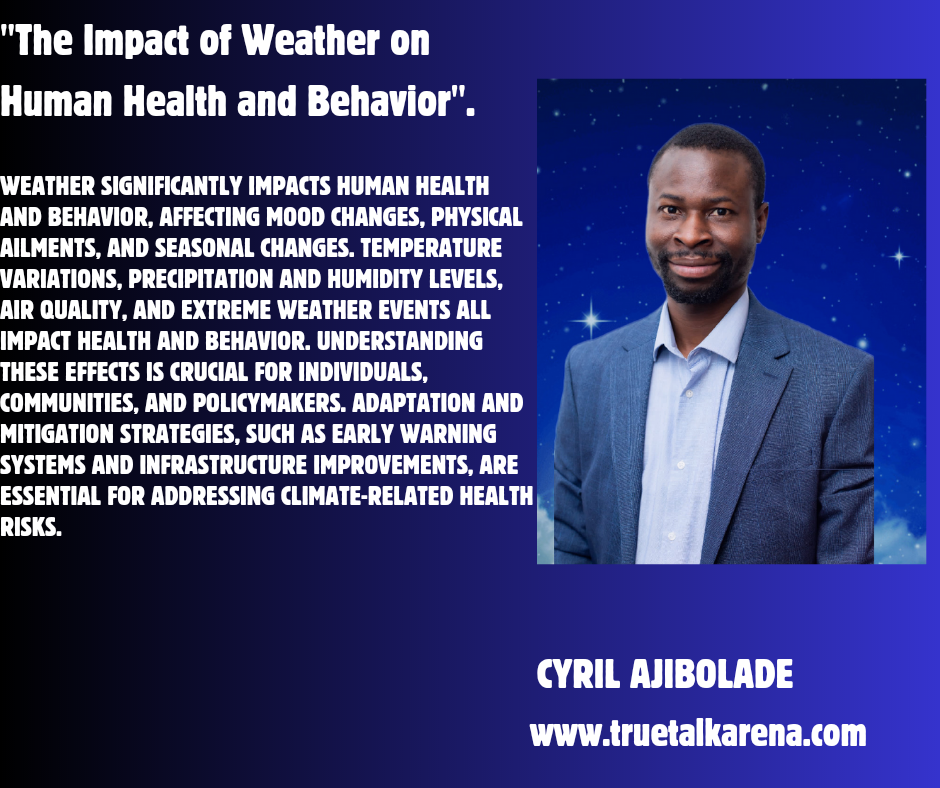
"THE IMPACT OF WEATHER ON HUMAN HEALTH AND BEHAVIOR".
Weather, the atmospheric conditions that prevail in a particular region at a particular time, has a profound impact on human health and behavior. From mood changes to physical ailments, weather influences various aspects of our lives in ways both subtle and significant.
Understanding these effects is crucial for individuals, communities, and policymakers alike.
TEMPERATURE :VariationsTemperature is perhaps the most obvious and immediate weather factor affecting human behavior and health.
EXTREME HEAT can lead to heatstroke, dehydration, and exacerbation of pre-existing health conditions such as cardiovascular diseases. On the other hand, extreme cold increases the risk of hypothermia and respiratory issues. Both extremes can also impact mental health, with heatwaves associated with increased aggression and violence, while cold weather can exacerbate feelings of isolation and depression.
CHANGES SEASONAL VARIATIONS in weather also play a significant role in human health and behavior. Seasonal affective disorder (SAD), a type of depression that occurs at a certain time of year, is linked to reduced sunlight during the winter months. Conversely, the longer days and increased sunlight during summer can lead to improved mood and energy levels for many individuals.
PRECIPITATION and HUMIDITY RAIN, snow, and humidity levels also affect human health and behavior. High humidity can exacerbate respiratory conditions such as asthma and allergies, while heavy rainfall can increase the risk of flooding and waterborne diseases. Conversely, prolonged droughts can lead to water shortages, crop failures, and food insecurity, impacting both physical and mental well-being.
AIR QUALITY WEATHER patterns can significantly influence air quality, with implications for respiratory health. High levels of air pollution, often exacerbated by weather conditions such as stagnant air masses or temperature inversions, can lead to respiratory problems, cardiovascular issues, and even premature death. Weather-related phenomena like dust storms and wildfires can also have severe health effects due to the release of particulate matter and harmful chemicals into the air.
EXTREME WEATHER :Extreme weather events, including hurricanes, tornadoes, wildfires, and floods, pose immediate threats to human life and well-being. These events can result in injuries, displacement, loss of homes and livelihoods, and psychological trauma. Vulnerable populations, such as the elderly, children, and those with pre-existing health conditions or limited access to resources, are often disproportionately affected by these disasters.
ADAPTATION and MITIGATION UNDERSTANDING the impact of weather on human health and behavior is essential for developing strategies to adapt to and mitigate these effects. This includes implementing early warning systems for extreme weather events, improving infrastructure to withstand climate-related hazards, and promoting public health initiatives to address weather-related health risks.
INDIVIDUAL COPING STRATEGIES :
An individual level, there are steps people can take to minimize the impact of weather on their health and well-being.
These may include :
STAYING HYDRATED DURING HOT WEATHER,
DRESSING APPROPRIATELY FOR COLD TEMPERATURES,
SEEKING SHELTER DURING EXTREME WEATHER EVENTS,
and MANAGING STRESS and MENTAL HEALTH ISSUES THROUGH HEALTHY COPING MECHANISMS.
In Conclusion,Weather exerts a profound influence on human health and behavior, shaping everything from our daily routines to our long-term well-being. As climate change accelerates, the frequency and intensity of extreme weather events are likely to increase, emphasizing the importance of understanding and addressing these impacts. By taking proactive measures at both the individual and societal levels, we can better protect human health and build resilient communities in the face of changing weather patterns.


0 COMMENTS