
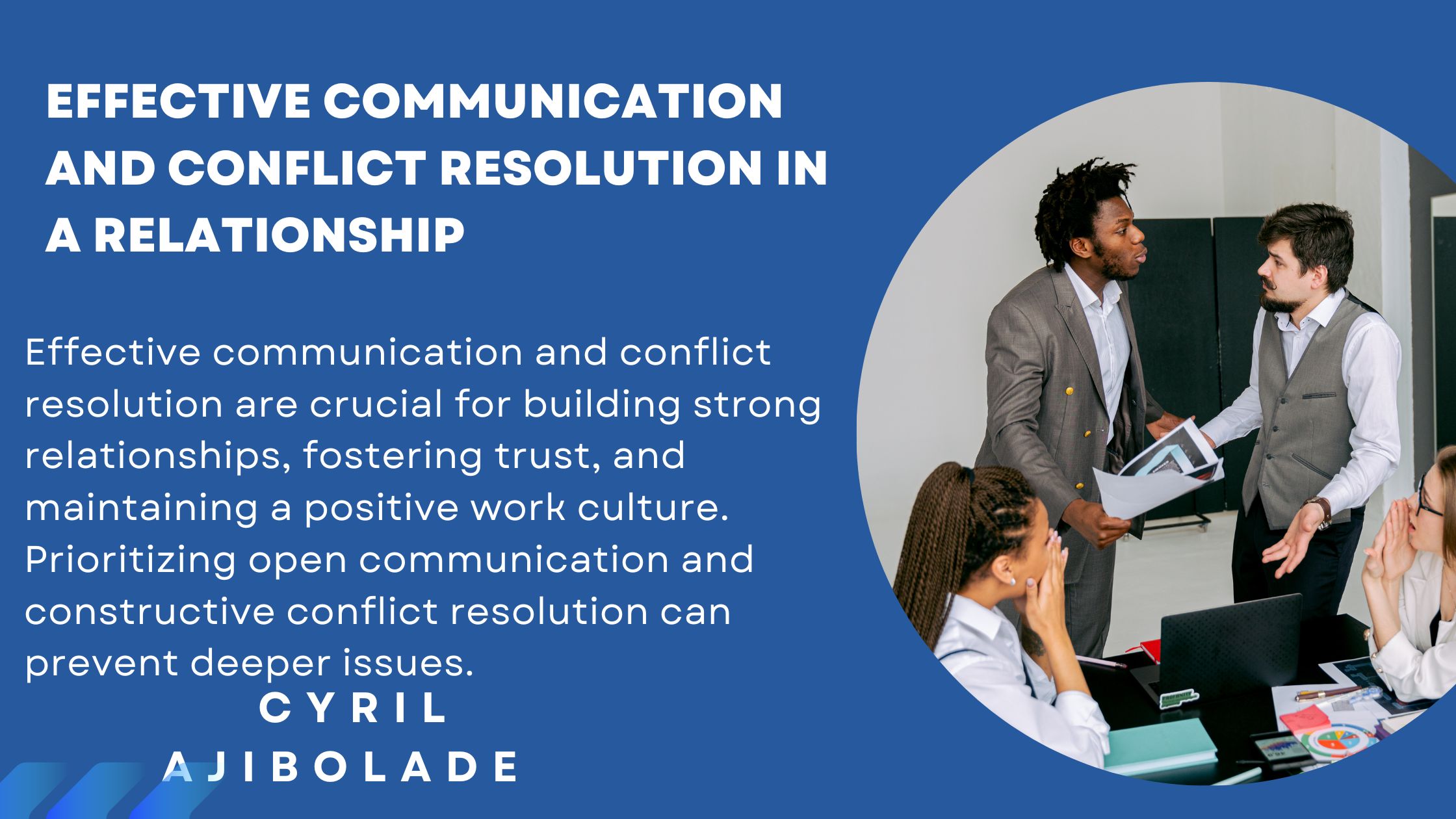
EFFECTIVE COMMUNICATION AND CONFLICT RESOLUTION IN RELATIONSHIP
EFFECTIVE COMMUNICATION AND CONFLICT RESOLUTION IN RELATIONSHIPS
Effective communication and conflict resolution are vital components of healthy relationships. In this essay, we will explore the significance of these skills in building and sustaining strong, lasting relationships. Communication is the cornerstone of any successful relationship, allowing individuals to express their thoughts, feelings, and needs. Conflict, on the other hand, is inevitable in any relationship, but how it is handled can make or break the connection. By examining the role of communication and conflict resolution in relationships, we can gain insights into the key elements that contribute to their longevity and strength.
Communication serves as the bedrock upon which all relationships are built. At its core, communication is about sharing, connecting, and understanding one another. In a romantic relationship, effective communication involves both partners openly expressing their thoughts, emotions, and desires. It is a process of active listening and empathetic response, allowing each person to feel heard and valued. When people feel that they can express themselves honestly and without judgment, it fosters a sense of trust and emotional intimacy.
Moreover, effective communication is not just about the words spoken; it includes non-verbal cues like body language, facial expressions, and tone of voice. These non-verbal elements often convey more than words themselves. It is crucial to pay attention to these signals, as they can reveal underlying emotions and thoughts that may not be explicitly stated.
Communication also plays a significant role in conflict prevention. When partners openly communicate, they can address issues as they arise, preventing them from escalating into larger conflicts. By discussing concerns early on, couples can avoid unnecessary misunderstandings and resentment. This proactive approach to communication can help maintain a positive atmosphere in the relationship.
However, conflict is an inherent part of any relationship. Disagreements and differences are natural, as no two people are exactly alike. The key to maintaining a healthy relationship lies in how conflicts are managed and resolved. Conflict resolution skills are essential for navigating the rough patches that every relationship encounters.
Effective conflict resolution involves several key principles. First and foremost is active listening. Each partner must be willing to hear the other's perspective without interruption and with an open mind. This promotes empathy and understanding, reducing the likelihood of escalation. Additionally, validation is crucial in conflict resolution. Partners should acknowledge each other's feelings, even if they don't agree with them. This validation demonstrates respect for the other person's emotions, which is essential in maintaining trust.
Another important aspect of conflict resolution is compromise. It's rare for both partners to fully agree on every issue. Compromise involves finding middle ground and seeking solutions that satisfy both parties to some extent. This willingness to give and take can strengthen a relationship, as it demonstrates a commitment to working together to overcome challenges.
Moreover, conflict resolution in healthy relationships includes time and space for individual reflection. Sometimes, taking a step back to think about the issue separately can provide clarity and perspective. This space allows emotions to settle, making it easier to address the conflict calmly and rationally.
An essential aspect of conflict resolution is the use of "I" statements. These statements focus on expressing one's feelings and needs without blaming or accusing the other person. For example, saying, "I feel hurt when you cancel plans at the last minute" is more constructive than saying, "You always cancel plans, and it's so inconsiderate." "I" statements help avoid defensiveness and promote understanding.
The importance of effective communication and conflict resolution in healthy relationships extends to various types of connections, not just romantic ones. Friendships, family relationships, and professional relationships also benefit from these skills. In friendships, open communication fosters trust and emotional support. Friends who can communicate openly are more likely to resolve conflicts and maintain strong bonds.
In family relationships, communication is the foundation of understanding and empathy. Parents and children, for instance, should be able to express their feelings and concerns. Open dialogue can help family members connect on a deeper level and address issues as they arise, ultimately strengthening the family unit.
In the workplace, effective communication and conflict resolution are crucial for maintaining a harmonious environment. Colleagues who can communicate their ideas and concerns are more likely to collaborate effectively. In addition, resolving conflicts in a professional manner promotes a healthy work culture and minimizes disruptions.
In essence, healthy relationships, whether they are romantic, familial, or professional, thrive on open communication and effective conflict resolution. These skills form the foundation for trust, emotional intimacy, and mutual respect. Without them, relationships are susceptible to miscommunication, resentment, and eventual breakdown.
Furthermore, when conflicts are not resolved effectively, they can lead to deeper issues, such as ongoing tension, emotional distance, or even the end of the relationship. Unresolved conflicts can fester and erode the connection between individuals. Therefore, addressing conflicts promptly and constructively is essential for maintaining the health and longevity of relationships.
In conclusion, communication and conflict resolution are the linchpins of healthy relationships. Effective communication allows individuals to connect on a deeper level, express their emotions and thoughts, and build trust. Conflict resolution skills enable couples and individuals to navigate differences and disagreements, promoting understanding and cooperation. These skills are not limited to romantic relationships but extend to friendships, family connections, and professional associations. By prioritizing open communication and constructive conflict resolution, individuals can nurture strong, lasting relationships that stand the test of time.

0 COMMENTS