
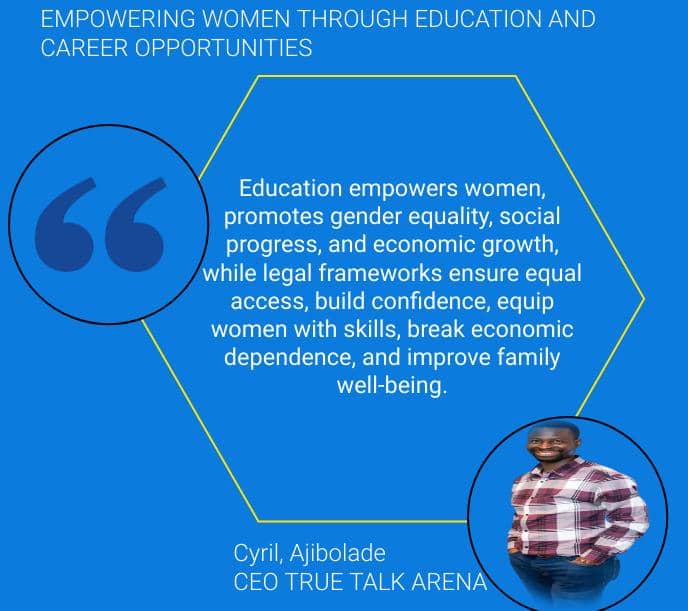
Empowering Women Through Education and Career Opportunities
Empowering Women Through Education and Career Opportunities
Introduction
Empowering women through education and career opportunities is not just a matter of gender equality; it's a critical step toward social progress and economic growth. In this blog, we will explore the importance of education and career opportunities for women, the challenges they often face, and the numerous benefits that accrue to society when women are given the chance to shine.
Education's Role in Gender Equality
Education has played a pivotal role in challenging and overcoming deep-rooted gender discrimination in various ways. This essay will explore how legal frameworks and policies, personal empowerment, economic independence, breaking the cycle of poverty, and challenging stereotypes have all been influenced by education in promoting gender equality.
I. Legal Frameworks and Policies
Legal reforms and policies have been crucial in promoting gender equality in education. Many countries have introduced laws that prohibit discrimination based on gender in educational institutions. These legal measures have ensured that women and girls have equal access to education, from primary to tertiary levels.
Equal Access: Legal frameworks have mandated equal access to education for both genders. This has led to increased enrollment of girls in schools and colleges, challenging traditional biases that limited their educational opportunities.
Anti-Discrimination Laws: Legislation has also addressed issues like sexual harassment and gender-based violence within educational institutions, making it safer for women to pursue their education.
Affirmative Action: Some countries have implemented affirmative action policies to bridge gender gaps, such as quotas for women in educational institutions and scholarships specifically for girls. These policies have helped overcome gender imbalances in traditionally male-dominated fields.
II. Building Confidence and Self-Esteem
Education serves as a foundation for building confidence and self-esteem in women, which are essential for challenging gender discrimination and asserting their rights.
A. Personal Empowerment: Education equips women with knowledge and skills, allowing them to make informed decisions about their lives, including choices related to career, marriage, and family planning. This empowerment helps them assert their rights and aspirations confidently.
B. Encouraging Critical Thinking: Education encourages women to question societal norms and expectations, fostering independence of thought. By challenging traditional gender roles and stereotypes, educated women become advocates for gender equality within their communities.
C. Promoting Leadership Skills: Educational opportunities nurture leadership skills in women. They learn to take on prominent roles in various fields, challenging the notion that leadership is exclusively a male domain. This not only benefits women individually but also promotes a more balanced and inclusive society.
III. Economic Independence
Education breaks the significant barrier of economic dependence for women by providing qualifications and opportunities for gainful employment.
A. Career Opportunities: Education opens doors to a wide range of career options, reducing women's dependency on others for financial support. It enables them to pursue careers that match their skills and interests, ultimately contributing to economic independence.
B. Entrepreneurship: Education can inspire women to become entrepreneurs, furthering their financial autonomy. With the knowledge and skills acquired through education, women can start and manage businesses, contributing to economic growth and job creation.
IV. Breaking the Cycle of Poverty
Education has a profound impact on breaking the cycle of poverty, especially for women, as educated women tend to have better family well-being and contribute to community development.
A. Family Well-being: Educated women often make informed decisions about family planning, leading to healthier and more prosperous households. They tend to have fewer children, provide better nutrition and healthcare, and invest more in their children's education.
B. Community Development: The positive effects of educated women extend to their communities. They are more likely to engage in community development initiatives, advocate for better healthcare, infrastructure, and social services, and contribute to the overall upliftment of their communities.
V. Challenging Stereotypes and Cultural Norms
Education challenges stereotypes and cultural norms that have historically limited women's roles and potential.
A. Role of Education in Shifting Perceptions: Education plays a vital role in challenging traditional gender roles and expectations. It encourages critical thinking and exposes individuals to diverse perspectives, fostering greater gender equality and a more inclusive society.
B. Promoting Gender Diversity: Educated women have made significant contributions to various fields, including science, technology, arts, and more. Their achievements showcase their capabilities and break down stereotypes, encouraging greater gender diversity and representation in these fields.
Furthermore, education has been instrumental in challenging and overcoming deep-rooted gender discrimination by addressing legal barriers, building confidence and self-esteem, promoting economic independence, breaking the cycle of poverty, and challenging stereotypes. It empowers women to be active participants in society, contributing to a more equitable and inclusive world.
Conclusion
Conclusively, empowering women through education and career opportunities is not just a matter of equality; it's an investment in a brighter future for all. By breaking down barriers, providing opportunities, and supporting women's advancement, societies can unlock the full potential of half their population, leading to greater economic prosperity, diversity in leadership, and social progress.

0 COMMENTS