
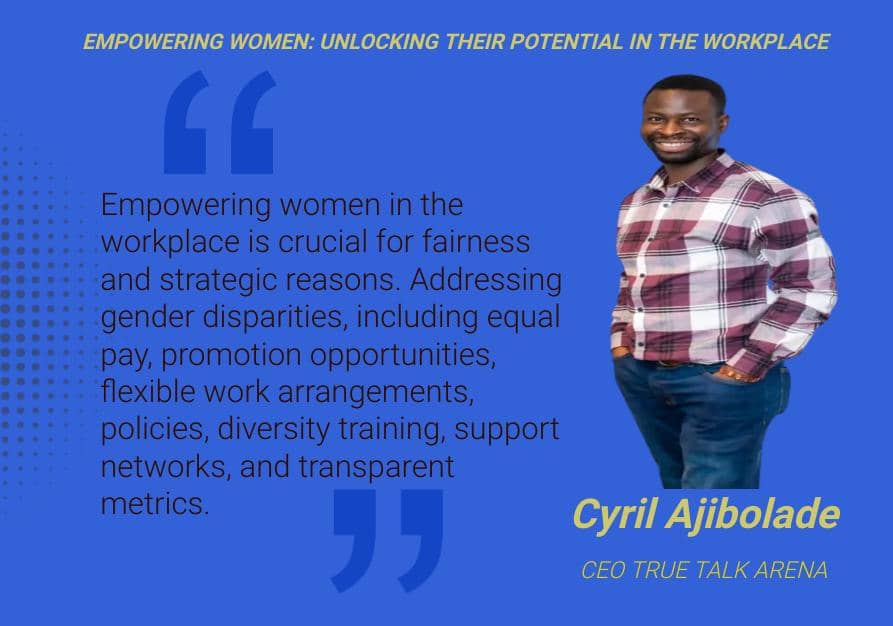
Empowering Women: Unlocking Their Potential in the Workplace.
Empowering Women: Unlocking Their Potential in the Workplace
Introduction
In today's rapidly evolving world, gender equality has become a central focus in discussions about social progress and economic development. Empowering women in the workplace is not just a matter of fairness; it is a strategic imperative for organizations and societies alike. This blog explores the importance of empowering women in the workplace and the steps that can be taken to unlock their full potential.
The Gender Gap
Despite significant progress in recent decades, gender disparities persist in workplaces around the world. Women continue to be underrepresented in leadership roles, earn less than their male counterparts, and face unique challenges such as the gender pay gap and a lack of opportunities for career advancement. Addressing these issues is not only a matter of justice but also makes sound economic sense.
The Business Case for Gender Equality
Numerous studies have shown that organizations with diverse workforces, including women in leadership positions, tend to perform better. Here are some reasons why empowering women in the workplace is beneficial for businesses:
Innovation: Diverse teams bring a broader range of perspectives and experiences to the table, fostering innovation and creativity.
Market Insights: Women make up a significant portion of the consumer market, and having women in decision-making roles helps companies better understand and cater to this demographic.
Talent Attraction and Retention: Companies that promote gender equality are more likely to attract top talent and retain their employees, reducing recruitment and training costs.
Improved Decision-Making: Diverse teams make better decisions because they consider a wider range of viewpoints and potential risks.
Enhanced Reputation: Companies that champion gender equality and diversity are viewed more positively by customers, investors, and the public.
Empowering Women: Strategies and Actions
To unlock the full potential of women in the workplace, organizations can implement a variety of strategies and actions:
Equal Pay: Ensure that women are paid the same as their male counterparts for equal work. Conduct regular pay equity audits to identify and rectify disparities.
Promotion and Leadership Opportunities: Create pathways for women to advance into leadership positions. This includes mentorship programs, leadership development training, and succession planning that includes gender diversity goals.
Flexible Work Arrangements: Offer flexible work options, such as remote work or flexible hours, to accommodate the diverse needs of employees, including working mothers.
Workplace Policies: Implement policies that support work-life balance, such as parental leave, childcare facilities, and support for employees facing family-related challenges.
Diversity and Inclusion Training: Educate employees about the importance of diversity and inclusion, as well as unconscious bias, to create a more inclusive workplace culture.
Support Networks: Establish employee resource groups or affinity networks to provide a sense of community and support for women in the workplace.
Transparent Metrics: Track and report on gender diversity metrics to hold the organization accountable for progress.
Conclusion
Empowering women in the workplace is not just about doing what's right; it's about creating a more prosperous and equitable future for all. When women are given the opportunity to unlock their full potential, businesses thrive, innovation flourishes, and society as a whole benefits. It's time for organizations to take concrete steps to bridge the gender gap and foster a workplace culture that values and promotes gender equality. By doing so, we can collectively create a more inclusive and prosperous world.


0 COMMENTS