
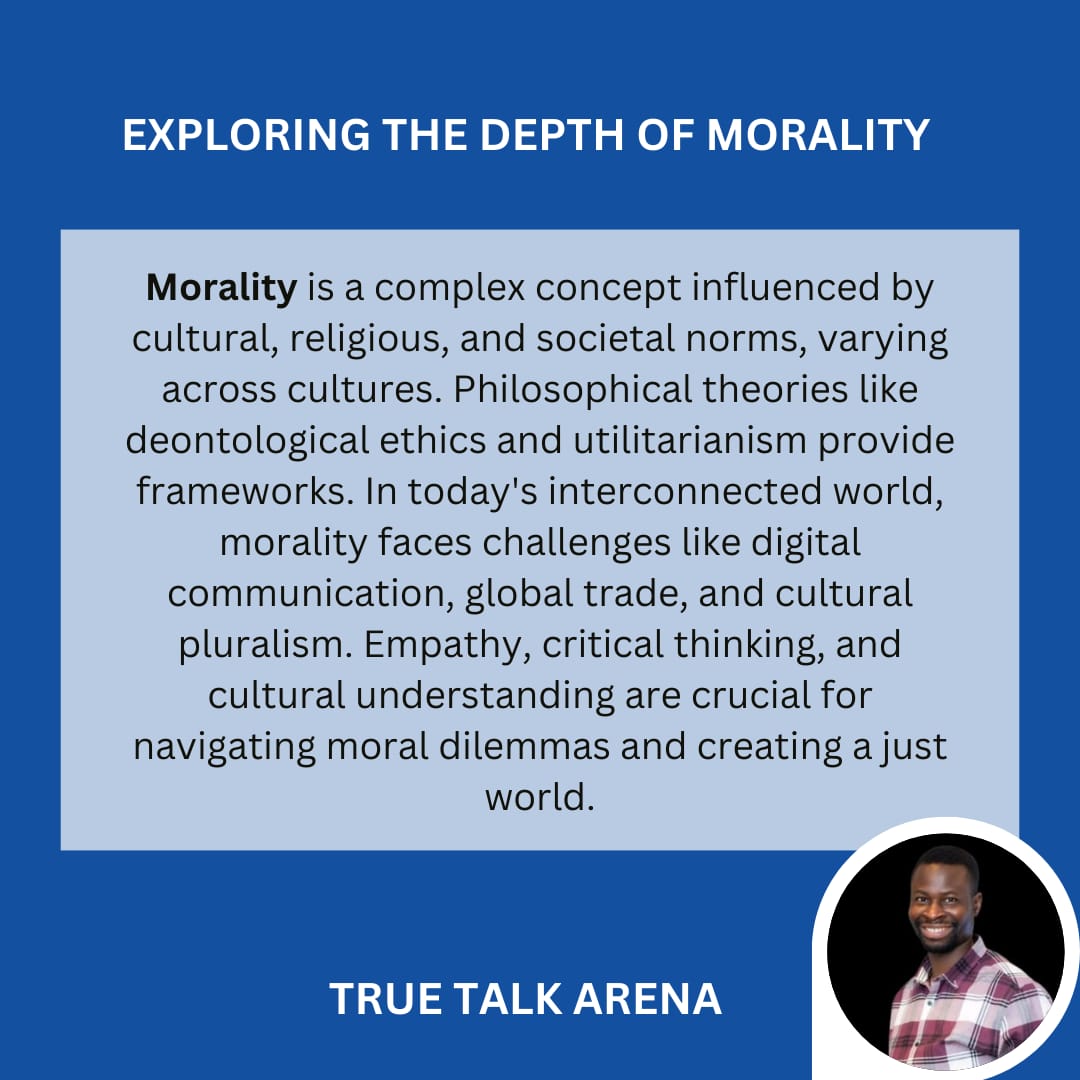
Exploring the Depths of Morality: Unraveling Its Complex Threads
Exploring the Depths of Morality: Unraveling Its Complex Threads
Morality, the intricate web that guides human behavior and decision-making, has been a subject of philosophical contemplation and ethical debate for centuries. From ancient philosophers to modern thinkers, the concept of morality continues to intrigue and challenge us. In this blog, we delve into the multifaceted nature of morality, examining its origins, cultural influences, and the perennial question of whether it is innate or learned.
The Origins of Morality: Nature or Nurture?
One of the most intriguing aspects of morality is its origins. Is it an inherent part of human nature, or is it shaped by societal norms and cultural context? Evolutionary psychologists argue that certain moral principles, like empathy and cooperation, are deeply ingrained in our evolutionary history as they contributed to the survival of our species. On the other hand, sociocultural theories contend that morality is largely a product of our environment, molded by the values and norms of the society in which we are raised.
Cultural Influences on Morality
The diversity of moral values across different cultures highlights the impact of cultural influences on our moral compass. What might be considered morally acceptable in one culture could be perceived as immoral in another. This leads to the question of whether there are universal moral principles that transcend cultural boundaries or if morality is entirely relative. Exploring these cultural variations sheds light on the dynamic interplay between individual convictions and societal expectations.
The Moral Dilemmas and Ethical Theories
Morality often confronts us with complex dilemmas where we must weigh competing values and make difficult decisions. Ethical theories provide frameworks for analyzing these situations. Utilitarianism, for instance, emphasizes maximizing overall happiness, while deontological ethics prioritizes adherence to moral rules. Virtue ethics centers on cultivating virtuous character traits. Each theory offers a unique perspective on how to navigate the intricate landscape of moral choices.
Technology and Morality
As society advances, technological progress introduces new moral challenges. Issues such as privacy in the digital age, the ethical implications of artificial intelligence, and the consequences of biotechnological innovations all demand careful moral consideration. The rapid pace of technological change often outpaces our ability to establish ethical guidelines, raising questions about how to approach these novel ethical dilemmas.
The Role of Moral Education
Whether morality is innate or learned, there is no denying the role of moral education in shaping our ethical perspectives. Families, schools, religious institutions, and the media all play a part in transmitting values and teaching individuals how to distinguish between right and wrong. The ongoing discourse around moral education underscores the importance of nurturing ethical reasoning and critical thinking from a young age.
Conclusion: Navigating the Moral Compass
In the labyrinth of moral philosophy, one thing remains clear: morality is a deeply complex and ever-evolving concept. It intertwines our evolutionary past, cultural backgrounds, and personal convictions. As we grapple with moral dilemmas in an increasingly interconnected world, understanding the diverse aspects of morality allows us to engage in thoughtful dialogue, make informed choices, and strive towards a more ethical existence. So, whether we seek answers in ancient texts or contemporary philosophy, the exploration of morality continues to be a journey well worth undertaking.

1 COMMENTS
Good and nice keep it up boss