
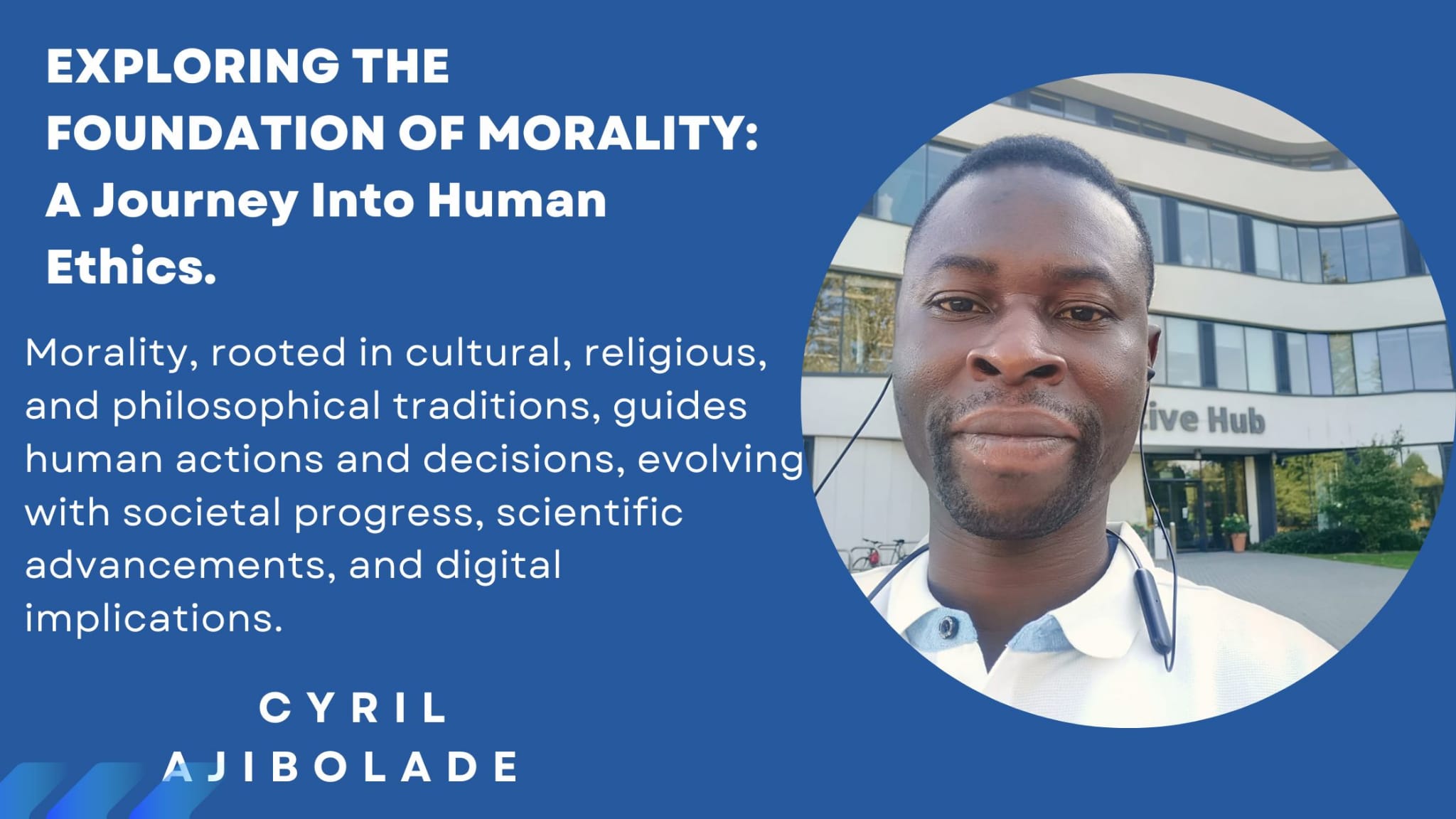
EXPLORING THE FOUNDATION OF MORALITY: A Journey Into Human Ethics.
Title: Exploring the Foundations of Morality: A Journey into Human Ethics
Introduction:
Morality, a concept deeply embedded in the fabric of human existence, serves as the compass guiding our actions and decisions. It is the philosophical study of what is right and wrong, good and bad, and the principles that govern human behavior. In this exploration of morality, we delve into its origins, the diversity of moral frameworks, and the evolving nature of ethical thinking.
The Roots of Morality:
Understanding morality requires an examination of its roots, which often intertwine with cultural, religious, and philosophical traditions. For many, morality finds its foundation in religious teachings, where divine commandments dictate the ethical path. Others turn to secular philosophies, such as utilitarianism or deontology, which prioritize consequences or duty, respectively.
Cultural nuances also play a significant role, shaping the moral codes that govern societies. The intersection of these various influences gives rise to a rich tapestry of moral perspectives across the globe.
Moral Relativism vs. Moral Objectivism:
The philosophical discourse on morality often revolves around the dichotomy of moral relativism and moral objectivism. Moral relativists argue that moral judgments are subjective and context-dependent, varying across cultures and individuals. In contrast, moral objectivists posit the existence of universal moral principles, independent of individual beliefs or cultural contexts.
Navigating the Gray Areas:
Morality is seldom a clear-cut landscape; it is riddled with gray areas and ethical dilemmas. Situations arise where conflicting moral principles collide, forcing individuals to grapple with the complexities of decision-making. Exploring these moral gray areas reveals the nuances inherent in ethical considerations and challenges the notion of a rigid moral framework.
The Role of Empathy and Compassion:
At the heart of morality lies the human capacity for empathy and compassion. These qualities bridge the gap between individuals and foster a sense of interconnectedness. Morality, in this light, becomes a shared endeavor aimed at promoting the well-being of others and fostering a harmonious coexistence.
Evolution of Morality:
Morality is not static; it evolves alongside societal progress, scientific advancements, and changing perspectives. As societies become more interconnected, the need for a global ethical framework becomes increasingly apparent. The ongoing dialogue surrounding emerging technologies, environmental concerns, and social justice reflects the dynamic nature of moral discourse.
Ethics in the Digital Age:
In the 21st century, the digital age introduces novel ethical challenges. Questions surrounding privacy, artificial intelligence, and the ethical implications of technology demand careful consideration. As we navigate this ever-changing landscape, ethical principles must adapt to address the unique challenges posed by our technologically advanced society.
Conclusion:
Morality is a complex and dynamic concept, deeply ingrained in human nature. Its roots in culture, religion, and philosophy provide a diverse tapestry of ethical perspectives. As we navigate the evolving landscape of morality, the principles of empathy, compassion, and a commitment to universal well-being remain steadfast. In a world facing unprecedented challenges, a nuanced understanding of morality becomes crucial for fostering a global ethical framework that can withstand the tests of time and progress.

0 COMMENTS