
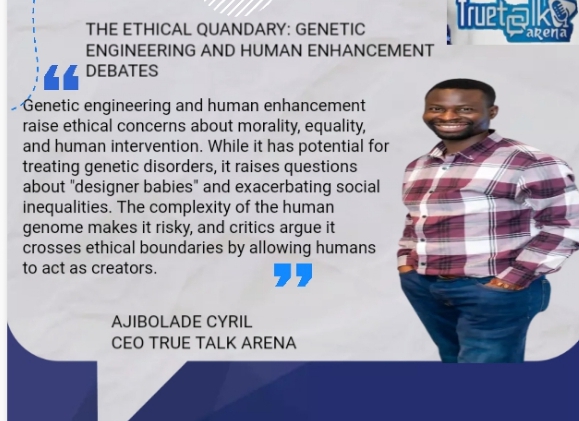
The Ethical Quandary: Genetic Engineering and Human Enhancement Debates
The Ethical Quandary: Genetic Engineering and Human Enhancement Debates
Introduction:
In the realm of scientific progress, few topics elicit as much controversy and heated debate as the ethical implications surrounding genetic engineering and human enhancement. As technology advances, the ability to manipulate the very fabric of our existence raises profound questions about morality, equality, and the limits of human intervention.
Understanding Genetic Engineering:
Genetic engineering involves altering the DNA of an organism, potentially leading to the modification of inherited traits. While this technology has shown promise in treating genetic disorders, the ability to edit genes for non-medical purposes raises ethical concerns. The concept of "designer babies" and selecting specific traits, such as intelligence or physical appearance, challenges our traditional understanding of natural reproduction.
Equality and Access:
One of the primary ethical concerns revolves around the potential exacerbation of existing social inequalities. If genetic enhancements become accessible only to the affluent, a new form of genetic aristocracy may emerge, creating a divide between those who can afford genetic enhancements and those who cannot. This raises questions about fairness, justice, and the potential for a dystopian future where genetic privilege determines societal status.
Unintended Consequences:
The complexity of the human genome makes genetic engineering inherently risky. Manipulating one gene to enhance a specific trait might inadvertently lead to unforeseen consequences, affecting other aspects of an individual's health or behavior. The potential for unintended consequences raises the question of whether we fully understand the long-term repercussions of playing with the fundamental building blocks of life.
Playing God and Ethical Boundaries:
Critics argue that genetic engineering crosses ethical boundaries by allowing humans to play the role of "creators." The power to alter the course of evolution and design life forms raises concerns about the potential hubris of humanity and the moral responsibility that comes with such immense power. The fear of unintended consequences and the unknown implications of manipulating the very essence of life lead many to question whether we should be tampering with nature at all.
Human Dignity and Autonomy:
The concept of human dignity is central to the ethical debate surrounding genetic engineering. Critics argue that manipulating genes for cosmetic or non-medical purposes devalues the inherent worth of individuals. Questions about autonomy arise when considering the choices made on behalf of future generations, potentially limiting their ability to determine their own destinies.
Ethical Frameworks:
As society grapples with these complex ethical questions, various frameworks emerge to guide decision-making. Utilitarian perspectives weigh the overall happiness or well-being that genetic engineering may bring against potential harm. Deontological approaches emphasize adherence to moral principles and duties, while virtue ethics considers the development of virtuous traits in individuals and society.
Conclusion:
The ethical implications of genetic engineering and human enhancement are undeniably complex and multifaceted. As science continues to advance, the need for thoughtful, inclusive, and informed discussions becomes paramount. Striking a balance between technological progress and ethical considerations is crucial to ensure that our pursuit of knowledge does not come at the cost of fundamental human values. The debates surrounding genetic engineering challenge us to reflect on the very essence of what it means to be human and how we navigate the ethical landscapes of a rapidly evolving future.


0 COMMENTS