
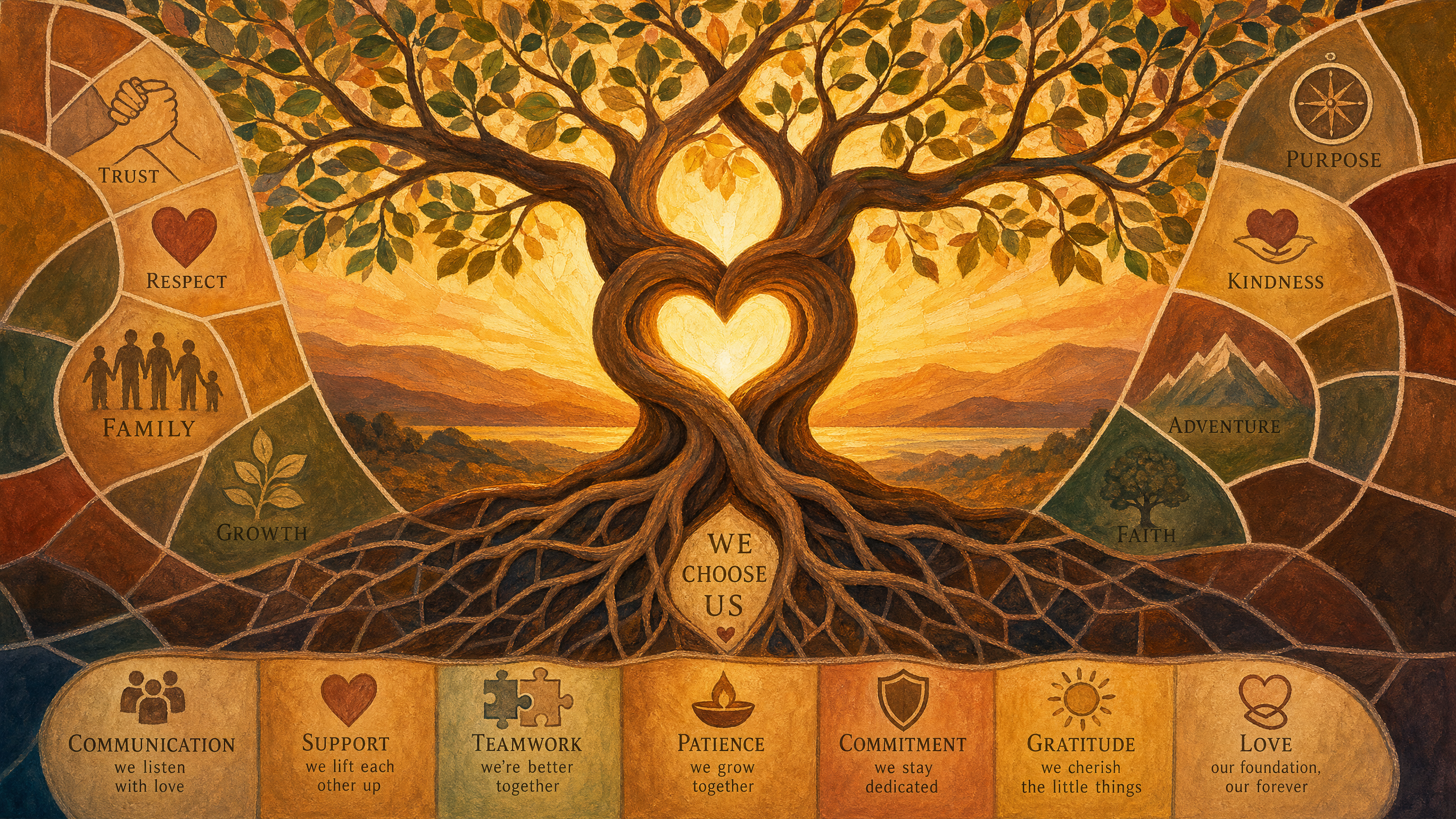
The Power of Shared Values: Building a Strong and Unified Marriage
The Power of Shared Values: Building a Strong and Unified Marriage
Introduction
Marriage is often envisioned as a union of two souls, a partnership built on love, respect, and mutual understanding. While these elements are undeniably crucial, there's a deeper, often understated, foundation that significantly contributes to a marriage's strength, resilience, and enduring happiness: shared values. Values are the fundamental beliefs and principles that guide our lives, influencing our decisions, priorities, and perceptions of the world. When partners align on these core values, their journey together becomes more harmonious, purposeful, and unified. This article explores the profound impact of shared values in marriage, why they are essential for long-term success, and how couples can identify, cultivate, and live by them.
What Are Shared Values in Marriage?
Shared values in marriage are the common ethical, moral, and personal principles that both partners hold dear. These are not merely preferences or interests, but deeply ingrained convictions that shape one's character and worldview. Examples of common values include honesty, integrity, family, faith, personal growth, financial responsibility, adventure, compassion, and community service. When a couple shares these foundational beliefs, they tend to approach life's big decisions—from raising children and managing finances to career choices and leisure activities—from a similar perspective, reducing friction and fostering a sense of partnership.
Distinguishing Values from Preferences:
It's important to differentiate values from preferences. Preferences are superficial likes or dislikes (e.g., favorite food, music genre, vacation spot), which can differ without impacting the core of a relationship. Values, however, are the non-negotiable principles that define who you are and how you want to live. While partners don't need to agree on every single thing, alignment on core values provides a moral compass for the relationship.
Why Shared Values are Essential for a Lasting Marriage
Shared values act as the bedrock of a strong marriage, providing stability and direction, especially during challenging times. Their importance cannot be overstated for several reasons:
- Provides a Unified Vision: When partners share values, they naturally work towards common goals and a shared vision for their future. This unity of purpose strengthens their bond and ensures they are moving in the same direction.
- Reduces Conflict and Misunderstanding: Disagreements are inevitable in any relationship, but when core values are aligned, couples are better equipped to navigate conflicts constructively. They understand each other's underlying motivations, making it easier to find common ground and compromise.
- Enhances Decision-Making: Major life decisions, such as career changes, relocation, parenting styles, or financial investments, become less daunting when both partners operate from a similar value system. This shared framework simplifies complex choices.
- Fosters Deeper Intimacy and Connection: Knowing that your partner shares your deepest convictions creates a profound sense of connection and intimacy. It builds trust and reinforces the feeling that you are truly understood and supported.
- Builds Resilience: Shared values provide a strong anchor during times of adversity. When faced with external pressures or internal struggles, couples can draw strength from their common principles, helping them weather storms together.
- Guides Parenting: For couples with children, shared values are invaluable in establishing consistent parenting approaches, instilling moral principles, and creating a cohesive family environment.
Identifying and Cultivating Shared Values
Many couples enter marriage without explicitly discussing their core values. However, it's never too late to explore and strengthen this foundation. Here's how:
-
Self-Reflection: Individually, take time to identify your top 3-5 core values. What principles are most important to you? What do you stand for? What guides your most significant decisions?
-
Open and Honest Dialogue: Schedule dedicated time to discuss your individual values with your partner. Share why each value is important to you and how it manifests in your life. Listen actively and empathetically to your partner's perspective.
-
Identify Overlaps and Differences: Look for areas where your values naturally align. These are your strengths. Also, identify areas where there might be differences. These are opportunities for growth, understanding, and compromise.
-
Prioritize and Unify: As a couple, work to identify 3-5 shared core values that will serve as the guiding principles for your marriage and family life. These might be values you both already hold, or new ones you decide to cultivate together.
-
Live Your Values: Consciously integrate your shared values into your daily lives. Make decisions that reflect these principles, from how you spend your time and money to how you interact with others and raise your children. Regularly revisit and reaffirm your values.
-
Lead by Example: Demonstrate your commitment to your shared values through your actions. This not only strengthens your personal integrity but also inspires your partner and, if applicable, your children.
Conclusion
Shared values are the invisible architects of a strong, unified, and lasting marriage. They provide a moral compass, a common language for decision-making, and a deep sense of purpose that transcends daily challenges. By intentionally identifying, cultivating, and living by these core principles, couples can build a relationship that is not only resilient in the face of adversity but also rich in meaning, intimacy, and unwavering unity. Investing in your shared values is an investment in the enduring success and happiness of your marriage.


0 COMMENTS